I was walking back home when an idea struck me (got to be careful, those buggers are everywhere) that human evolution may ceased to be influenced by nature selection. With all our break through in medical sciences and our mastery of our environment, we have transcend the limitation of nature. All the conditions and circumstances that have driven our evolution has ceased to be applicable to us. Nature selection for human has reached a new epoch. What will be the driving factors in the next phrase of human evolution?
In other words, what factors will give one human advantages over another in passing on his or her genes to future generations?
Is it looks? Wealth? Social Classes? Intelligence? Or maybe, has human overcome our age-old instinct to reproduces as many copies of our genes as possible? After all, sex is now more for enjoyment than reproduction. If so, how will human change? Will we instead of improving, fall back down a slippery slop, since there are no evolutionary pressures?
I don't really have any answers here, I'm just recording down what I'm thinking about.
Link: Is human evolution finally over?
--
6 January 2007


5 January 2007
Love's Philosophy
By Percy Bysshe Shelly:
This poem (beautiful by the way) and the last 2 movies I watched on my TV, Love Actually and You got Mail got me thinking about "Love" as a concept. Penn and Teller's Bullshit! have a show on The Business of Love, watch it here:
We are all familiar with shows with the "they live happily ever after" endings. It's always "they" isn't it? It seems that a single "he" or "she" could not live as happily as a "they". With all this "love at first sight" and "riding off into the sunset", could we have been taken for a ride? Does the real world really works that way?
In the study of Sociology, we know that social conditioning can have a tremendous impact on people's behavior. We can predict at what age a person of a certain gender and social upbringing would want to get married, how many kids he or she would like and even what sort of person he or she is likely to marry. "Love" in this sense seems to be a very socially constructed arrangement. For example monogamy, which is not always the norm, has been taken to be a sign or criterion of "true love". Not too long ago, in a different culture setting, this Hollywood's ending would have little to do with one's "love" for a person.
"What is love" has always been a difficult question to answer, and is therefore a perfect philosophical question. Perhaps we could examine it using evolution, where individuals find that having a fixed partner have an added advantage in the division of labour. We can see the same partnership in countless animals such as lions, penguins , various mammals, and so on. Can their partnership be considered "love"? Could our "love" simply be a romanticised concept of choosing an advantageous partner to pass on our genes?
Does "Love" somehow involves the "Soul" or is it simply a chemical change in the brain?
Could we be spending a tremendous amount of time and effort chasing after something that doesn't exist in the first place?
--
The fountains mingle with the river
And the rivers with the ocean,
The winds of Heaven mix for ever
With a sweet emotion;
Nothing in the world is single,
All things by a law divine
In one another's being mingle --
Why not I with thine?
See the mountains kiss high heaven
And the waves clasp one another;
No sister-flower would be forgiven
If it disdain'd its brother;
And the sunlight clasps the earth,
And the moonbeams kiss the sea --
What are all these kissings worth,
If thou kiss not me?
This poem (beautiful by the way) and the last 2 movies I watched on my TV, Love Actually and You got Mail got me thinking about "Love" as a concept. Penn and Teller's Bullshit! have a show on The Business of Love, watch it here:
We are all familiar with shows with the "they live happily ever after" endings. It's always "they" isn't it? It seems that a single "he" or "she" could not live as happily as a "they". With all this "love at first sight" and "riding off into the sunset", could we have been taken for a ride? Does the real world really works that way?
In the study of Sociology, we know that social conditioning can have a tremendous impact on people's behavior. We can predict at what age a person of a certain gender and social upbringing would want to get married, how many kids he or she would like and even what sort of person he or she is likely to marry. "Love" in this sense seems to be a very socially constructed arrangement. For example monogamy, which is not always the norm, has been taken to be a sign or criterion of "true love". Not too long ago, in a different culture setting, this Hollywood's ending would have little to do with one's "love" for a person.
"What is love" has always been a difficult question to answer, and is therefore a perfect philosophical question. Perhaps we could examine it using evolution, where individuals find that having a fixed partner have an added advantage in the division of labour. We can see the same partnership in countless animals such as lions, penguins , various mammals, and so on. Can their partnership be considered "love"? Could our "love" simply be a romanticised concept of choosing an advantageous partner to pass on our genes?
Does "Love" somehow involves the "Soul" or is it simply a chemical change in the brain?
Could we be spending a tremendous amount of time and effort chasing after something that doesn't exist in the first place?
--
3 January 2007
Pirates and Emperor
Well Sadam Hussein kicked the bucket, thanks to his old friend Uncle Sam. Is oil the reason?
History of Oil: WWI, Iraq war...
There are crimes so big, there are no law against them.
History of Oil: WWI, Iraq war...
There are crimes so big, there are no law against them.
31 December 2006
What is Philosophy?
For those who don't know, I have decided to major in philosophy for my undergrad studies in NUS. I have encouraged several reactions whenever I told someone about this; people has it mixed up with Psychology, there is the usual "then I better not talk with you again, I don't want to be confessed" respond, the nice and polite "what is philosophy?" and of course the pragmatic "what are you going to do after gradation?" Philosophy seems to equal "cheeminology" for many people who are not expose to the subject, and who can blame them? The common imagination of philosophy seems to be Hollywood's middle-aged, slightly breaded, absent-minded man pacing around the common room of Cambridge, occasionally staring dreamily into space.
I too have thought that philosophy is lofty ideas and abstract concepts completely out of touch with reality, and lacking any practical value. It was not too long ago, at the beginning of the semester in fact, where I left the philosophical department with the impression, well:"These weird people are clueless about the real world, and possible wasting their life." I signed up for the introductory module, just for fun (like everything I do), and quite evidently, changed my view. I guess I can safely say here that a little knowledge is a dangerous thing, or at lease, a misleading thing.
So I attempt here to record down, what (I feel) is philosophy. What is philosophy is actually a much harder question that people expect. it's like my own dilemma of answering: "What is Aikido?" A standard rigid answer like "Aikido is a graceful and gentle martial arts" doesn't seem to cut it, the collection of words doesn't tell the asker anything he or she doesn't know.
I could point to famous philosophers and points to the writing of Plato, Aristotle, Descartes, Hume Kant; but that is not very helpful, especially for those who are unfamiliar with philosophy. And I feel this approach is not very honest, after all philosophy is everywhere you care to look.
The root word came from Greek, and means "Love of Wisdom". If I have to use one word to describe philosophy, I would use: "Question" (some people would use "nonsense"). To me, philosophy is the art of questioning. A quest I would say. Using logical argument, an integrated part of philosophy, it is the examination of ideas and beliefs that most people take for granted.
The diversity of philosophy is really mind boggling. From environmental philosophy, to philosophy of justice, moral, politics, life, mind, film, science, arts, government, religion...the list is endless. The recent court case of the teenager who was surfing on his neighbour's wifi connection has gotten Singaporean talking. He could have been sentenced to a maximum of 3 years in jail. Is it thief? What is stolen? Whose's fault is it? The owner for not securing the connection? If your sprinkler waters the garden of your neighbour, could you say your neighbour is stealing water from you? Is the law fair? Should laws be fair? Could laws be fair? These are questions that arise from a simple news article. Many questions like abortion, right of mothers? Simulated organism, alive? Death penalty, should we? These are questions that should, at the very lease, be considered very seriously.
But why? What's the point? It has been argued that there is no point in studying philosophy as all philosophy ever do is sit around quibbling over the meaning of words. Ancients problems since the time of Plato are still unanswered, and philosophers seems to be uncovering more problems everyday. Job security maybe but they never seem to reach any conclusions of any importance and their contribution to society is non-existent.
Meno has the same thing to say about Socrates around 400 B.C.
Nigel Warburnton discuss in his book Basic Philosophy that:
But humans, you and me, are born questioners. By that fact, all kids are great philosophers. Our young questioning mind holds the world in awe. Life was a series of questions, often followed by bad answers. For example, the physicist Richard Feynman liked to tell a story about how when he was a little kid, he asked his father, "Why do things fall. As an adult, he praised his father for answering, "Nobody knows why things fall. It’s a deep mystery, and the smartest people in the world don't know the basic reason for it." Contrast that with the average person’s off-the-cuff answer, "Oh, it’s because of gravity." (http://www.faqs.org/docs/Newtonian/Newtonian_77.htm)
Thinking back, many of the questions that I had as a child has not been answered, and more has emerged as I live my life. If has been said that an unexamined life is not worth living, no? It is my belief that for many people, it takes too much effort or too disturbing to ask ourselves such questions. Philosophy provides a fantastic platform to examine these questions.
I'm going to borrow an example here from BBC News:
Can you really solve real problems by thinking about things? Well, Galileo did. Aristotle believed that things fall at different speed based on their weight, and it was held as truth for centuries. Until Galileo extend the concept logically and come to a totally different conclusion:
Stories have it that Galileo never saw the need to test his conclusion by dropping 2 balls from the tower of Pairs.
Philosophy severs at least another function by detecting bullshit. There are so many inconsistencies and ridiculous nonsense in the world that someone must say, "hang on, that doesn't sound right."
Lastly, I want to end by saying that everyone, whether you realises it or not, is a philosopher. Almost everyday, at so point, everyone engages in philosophical thoughts. Just like what my philosophy professor told us: "philosophy is not a thing that flourishes only in artificial environments ... like philosophy departments. No, it’s a stubborn, hardy weed that springs up just about everywhere you might care to look...".
Come for the answer, stay for the questions.
P/S: "The value of philosophy" by Bertand Russell makes the point better than I ever could. See it here: http://skepdic.com/russell.html
I too have thought that philosophy is lofty ideas and abstract concepts completely out of touch with reality, and lacking any practical value. It was not too long ago, at the beginning of the semester in fact, where I left the philosophical department with the impression, well:"These weird people are clueless about the real world, and possible wasting their life." I signed up for the introductory module, just for fun (like everything I do), and quite evidently, changed my view. I guess I can safely say here that a little knowledge is a dangerous thing, or at lease, a misleading thing.
So I attempt here to record down, what (I feel) is philosophy. What is philosophy is actually a much harder question that people expect. it's like my own dilemma of answering: "What is Aikido?" A standard rigid answer like "Aikido is a graceful and gentle martial arts" doesn't seem to cut it, the collection of words doesn't tell the asker anything he or she doesn't know.
I could point to famous philosophers and points to the writing of Plato, Aristotle, Descartes, Hume Kant; but that is not very helpful, especially for those who are unfamiliar with philosophy. And I feel this approach is not very honest, after all philosophy is everywhere you care to look.
The root word came from Greek, and means "Love of Wisdom". If I have to use one word to describe philosophy, I would use: "Question" (some people would use "nonsense"). To me, philosophy is the art of questioning. A quest I would say. Using logical argument, an integrated part of philosophy, it is the examination of ideas and beliefs that most people take for granted.
The diversity of philosophy is really mind boggling. From environmental philosophy, to philosophy of justice, moral, politics, life, mind, film, science, arts, government, religion...the list is endless. The recent court case of the teenager who was surfing on his neighbour's wifi connection has gotten Singaporean talking. He could have been sentenced to a maximum of 3 years in jail. Is it thief? What is stolen? Whose's fault is it? The owner for not securing the connection? If your sprinkler waters the garden of your neighbour, could you say your neighbour is stealing water from you? Is the law fair? Should laws be fair? Could laws be fair? These are questions that arise from a simple news article. Many questions like abortion, right of mothers? Simulated organism, alive? Death penalty, should we? These are questions that should, at the very lease, be considered very seriously.
But why? What's the point? It has been argued that there is no point in studying philosophy as all philosophy ever do is sit around quibbling over the meaning of words. Ancients problems since the time of Plato are still unanswered, and philosophers seems to be uncovering more problems everyday. Job security maybe but they never seem to reach any conclusions of any importance and their contribution to society is non-existent.
Meno has the same thing to say about Socrates around 400 B.C.
Meno: Socrates, even before I met you, I heard others talk about how you are always completely perplexed about everything, and how you drag everyone else down into the same pit of perplexity. And now here we are. I think you have been bewitching and enchanting me. You've cast some spell over me, so now I'm completely at a loss. In fact, if you don't mind my making a bit of a joke, I think you're very like a stingray - that strange flat fish that paralyses anyone who approaches and touches it - and not just in that way. You look like one, too.
Nigel Warburnton discuss in his book Basic Philosophy that:
"Start to question the fundamental assumptions of our lives could be dangerous, we might end up feeling unable to do anything, paralysed by questioning too much."
But humans, you and me, are born questioners. By that fact, all kids are great philosophers. Our young questioning mind holds the world in awe. Life was a series of questions, often followed by bad answers. For example, the physicist Richard Feynman liked to tell a story about how when he was a little kid, he asked his father, "Why do things fall. As an adult, he praised his father for answering, "Nobody knows why things fall. It’s a deep mystery, and the smartest people in the world don't know the basic reason for it." Contrast that with the average person’s off-the-cuff answer, "Oh, it’s because of gravity." (http://www.faqs.org/docs/Newtonian/Newtonian_77.htm)
Thinking back, many of the questions that I had as a child has not been answered, and more has emerged as I live my life. If has been said that an unexamined life is not worth living, no? It is my belief that for many people, it takes too much effort or too disturbing to ask ourselves such questions. Philosophy provides a fantastic platform to examine these questions.
I'm going to borrow an example here from BBC News:
One day, you wake up in hospital. In the nearby bed lies a world famous violinist who is connected to you with various tubes and machines.I could not tell you how to think or respond in the above situation but I can show you inconsistencies in your thoughts if the 2 answer differ. There may not be an answer, but the question itself have opened new doors to look at the issue and the world.
To your horror, you discover that you have been kidnapped by the Music Appreciation Society. Aware of the maestro's impending death, they hooked you up to the violinist.
If you stay in the hospital bed, connected to the violinist, he will be totally cured in nine months. You are unlikely to suffer harm. No one else can save him. Do you have an obligation to stay connected?
The creator of the experiment, Judith Thomson, thinks the answer is "no". It would be generous if you did, she claims, but there is no obligation to stay, even if that means the violinist will die.
So how is this bizarre scenario related to the real world? Thomson used the experiment to show that a pregnant woman need not go to full term with her baby, as long as she had taken reasonable steps to avoid getting pregnant. It is thus a "pro-choice" argument.
The violinist represents the baby, and you - in the hospital bed - play the role of the mother. If you think unhooking yourself from the violinist is acceptable, but aborting an unwanted foetus is not, what are the moral differences between the two cases? In both situations, you could save a person by bearing a great burden for nine months.
Can you really solve real problems by thinking about things? Well, Galileo did. Aristotle believed that things fall at different speed based on their weight, and it was held as truth for centuries. Until Galileo extend the concept logically and come to a totally different conclusion:
SIMPLICIO: There can be no doubt but that a particular body ... has a fixed velocity which is determined by nature...
SALVIATI: If then we take two bodies whose natural speeds are different, it is clear that, [according to Aristotle], on uniting the two, the more rapid one will be partly held back by the slower, and the slower will be somewhat hastened by the swifter. Do you not agree with me
in this opinion.
SIMPLICIO: You are unquestionably right.
SALVIATI: But if this is true, and if a large stone moves with a speed of, say, eight [unspecified units] while a smaller moves with a speed of four, then when they are united, the system will move with a speed less than eight; but the two stones when tied together make a stone larger than that which before moved with a speed of eight. Hence the heavier body moves with less speed than the lighter; an effect which is contrary to your supposition. Thus you see how, from your assumption that the heavier body moves more rapidly than the lighter one, I infer that the heavier body moves more slowly.
[tr. Crew and De Salvio]
Stories have it that Galileo never saw the need to test his conclusion by dropping 2 balls from the tower of Pairs.
Philosophy severs at least another function by detecting bullshit. There are so many inconsistencies and ridiculous nonsense in the world that someone must say, "hang on, that doesn't sound right."
Lastly, I want to end by saying that everyone, whether you realises it or not, is a philosopher. Almost everyday, at so point, everyone engages in philosophical thoughts. Just like what my philosophy professor told us: "philosophy is not a thing that flourishes only in artificial environments ... like philosophy departments. No, it’s a stubborn, hardy weed that springs up just about everywhere you might care to look...".
Come for the answer, stay for the questions.
P/S: "The value of philosophy" by Bertand Russell makes the point better than I ever could. See it here: http://skepdic.com/russell.html
27 December 2006
ahem...I passed?
Hey, the results for my first semester at NUS is out.
How should I say this? It's like you leaving a socking by your bed on Christmas eve, just for the fun of it, and discovering that it has been filled on Christmas morning. On one hand you are sort of happy that you got presents but on the other hand, you are thinking: "How the hell did this happen? This is crazy!"
Exactly what I'm going through. "I didn't failed ANY thing? How the hell did I pull this off?" While I'm glad, in a happily selfish way, I'm also kina of losing faith in Singapore's education system in the sense that if I'm getting Bs, imagine the trash we are passing out the University.
No, I'm serious. If I'm the one marking my papers, I'll fail me. But that's not to say I didn't learn anything this semester, in fact, I had a great time! For the first time in my life, school is fun and actually lets you learn something.
Geography(1101E), Place, Environment and Society:"B-".
Well, I was never quite sure what geography is all about except that it got something to do with rocks and rainfall. The reason I picked this module is because T.C.Chang's mussing about "magical eyes" and "seeing the world in a whole new way" caught my imagination at the beginning of the term. I was not disappointed. Dr Chang's human geography has introduced an important concept that I have never consider before, the idea of "geographical imagination". How people impression of a place can be influenced and the various social and political agendas behind such imaginations. A good example will be Iraq. Think back to how the America media present the country before the war. isn't the images and message specially tailored to justified going to war? America was portrayed as liberators. Not unlike the colonisation of the East by Western powers in the pre-coloniser era. Edward Said has in his book "Orientalism" proport that Colonialism is the direct result of the stereotypes of the East by Western powers as lazy, backward, ignorance and needy of civilization. Such imagination has been used successfully to justified colonialism. Our P.M Lee's national day message and our national songs are flowered with various geographical terms, think "land of opportunity", "home", where I belong", "land of peace".
The physical geography by (the newly) Dr Lim is a whole lot of joy as well. They never fail to make me laugh.
Chemistry(1535), Our Atmosphere: A Chemical Perspective:"B-".
No idea at all, the exam is MCQs, what can I say? I'm lucky.
Philosophy(1101E), Reason and Persuasion: "A".
Ever have a classmate that never seems to do any serious work, yet breeze through exams, and score really well? Don't we just hate people like that?
Well, I think I have found my niche here. I really enjoy philosophical text and the lectures are better that stand-up comedy (to me anyway). I mean, it's really interesting. The realms of ideas, truths and uncertainty suits me who grow wearily of this mundane existent.
Sociology(1101E), Making Sense of Society:"B-".
Sociology is unsurprisingly a very popular choice of major. Not for me though, too much like real work. I prefer to read a book and call it research.
Southeast Asia Studies(1101E), Southeast Asia: A Changing Region:"B".
This is one fun module. We watch movies, listen to songs and discuss about black magic and sex. Way cool. What is puzzling is how I got a B, because I know for a fact that I did very badly in the exam, and my assignments are worth crying over.
How should I say this? It's like you leaving a socking by your bed on Christmas eve, just for the fun of it, and discovering that it has been filled on Christmas morning. On one hand you are sort of happy that you got presents but on the other hand, you are thinking: "How the hell did this happen? This is crazy!"
Exactly what I'm going through. "I didn't failed ANY thing? How the hell did I pull this off?" While I'm glad, in a happily selfish way, I'm also kina of losing faith in Singapore's education system in the sense that if I'm getting Bs, imagine the trash we are passing out the University.
No, I'm serious. If I'm the one marking my papers, I'll fail me. But that's not to say I didn't learn anything this semester, in fact, I had a great time! For the first time in my life, school is fun and actually lets you learn something.
Geography(1101E), Place, Environment and Society:"B-".
Well, I was never quite sure what geography is all about except that it got something to do with rocks and rainfall. The reason I picked this module is because T.C.Chang's mussing about "magical eyes" and "seeing the world in a whole new way" caught my imagination at the beginning of the term. I was not disappointed. Dr Chang's human geography has introduced an important concept that I have never consider before, the idea of "geographical imagination". How people impression of a place can be influenced and the various social and political agendas behind such imaginations. A good example will be Iraq. Think back to how the America media present the country before the war. isn't the images and message specially tailored to justified going to war? America was portrayed as liberators. Not unlike the colonisation of the East by Western powers in the pre-coloniser era. Edward Said has in his book "Orientalism" proport that Colonialism is the direct result of the stereotypes of the East by Western powers as lazy, backward, ignorance and needy of civilization. Such imagination has been used successfully to justified colonialism. Our P.M Lee's national day message and our national songs are flowered with various geographical terms, think "land of opportunity", "home", where I belong", "land of peace".
The physical geography by (the newly) Dr Lim is a whole lot of joy as well. They never fail to make me laugh.
Chemistry(1535), Our Atmosphere: A Chemical Perspective:"B-".
No idea at all, the exam is MCQs, what can I say? I'm lucky.
Philosophy(1101E), Reason and Persuasion: "A".
Ever have a classmate that never seems to do any serious work, yet breeze through exams, and score really well? Don't we just hate people like that?
Well, I think I have found my niche here. I really enjoy philosophical text and the lectures are better that stand-up comedy (to me anyway). I mean, it's really interesting. The realms of ideas, truths and uncertainty suits me who grow wearily of this mundane existent.
Sociology(1101E), Making Sense of Society:"B-".
Sociology is unsurprisingly a very popular choice of major. Not for me though, too much like real work. I prefer to read a book and call it research.
Southeast Asia Studies(1101E), Southeast Asia: A Changing Region:"B".
This is one fun module. We watch movies, listen to songs and discuss about black magic and sex. Way cool. What is puzzling is how I got a B, because I know for a fact that I did very badly in the exam, and my assignments are worth crying over.
20 December 2006
War on Christmas

I though I'll start after a long break with a Christmas theme post seeing how it's just around the corner.
Religion has been making headlines for the past few years, with Islam graping the most attention and Christianity coming a close second. It would seem unfair to pick on these 2 religion, bagging them with difficult questions and criticism. But these are the 2 biggest religion that are actively, and increasingly so, influencing politics and the life of millions of people. The best way to clear the room is to remove the biggest elephants first.
Religion has for too long been a sacred cow. It is THE convention stopper. Anytime people says: "This is my faith". People are suppose to politely look away, resits the urge to roll their eyes, and tactfully change the topic. Rational, open, and intelligent people who can talk at length about politics and sex are stopped by the mere mention of the the word 'faith'.
I do not have any issues about people who finds comfort in their faith and do not wish to question them. After all, there are some, if diagnose with a terminal illness would wish for their doctor to lie to them. But I do have BIG issues with people who let their personal faith interfere with the rights of other people.
I was browsing through Malaysian Atheist site when I came across his post on "Jesus Camp"
Last night I watched a horror movie. This one was scarier than all of Wes Craven's movies, all the Friday the 13th, Nightmare on Elm Street or Halloween slasher flicks I've seen before. And the amazing thing is that this movie doesn't have any psychotic killers, ghoulish monsters and no blood and gore. What makes this movie scary is that it is REAL and it's called Jesus Camp.Unsurprisingly he is also a sympathiser of Richard Dawkins, which I am also a fan of. Richard Dawkins has liken blind faith to a virus to which we infect our children with. Children in their childlike innocence, is being scared shitless and brainwashed by the people they trusted the most. They are taught that Evolution and Global Warming aren't real. And what evident does the adults have that the world actually works that way? 'Faith'.
Somewhere out there in middle America, talibanic Christian fundamentalists are creating an army of children to wage war against secular America...
Jesus Camp has been uploaded into you-tube so, do see and judge for yourself if my statements are too harsh.
Part 1: http://www.youtube.com/watch?v=nl0MwNFry2cWhile you are at it do, check out Richard Dawkins new book, The God Delusion and his documentary(free!) Root of all Evil at Google video.
Part 2: http://www.youtube.com/watch?v=DXLkJI5E4gM
Part 3: http://www.youtube.com/watch?v=xZ5XxO3jI24
Part 4: http://www.youtube.com/watch?v=_kwsv3fSGbs
Part 5: http://www.youtube.com/watch?v=6BM06UnCcI4
Part 6: http://www.youtube.com/watch?v=jvvVYXW3gUs
Part 7: http://www.youtube.com/watch?v=2absvyNj71g
Part 8: http://www.youtube.com/watch?v=h2oUOu96a2k
Lastly, I want to make it crystal clear that I'm aware that they are many rational, loving and non-fundamental Christians around. Going to University has allowed me to meet more of you. My question to you is: "Why so silent?" Is it unawareness? Or a sense of helplessness? Religion has a history of causing clever people to do stupid things, so please stand up if you feel that your religion is been hijacked.
7 October 2006
Mid-autumn pictures
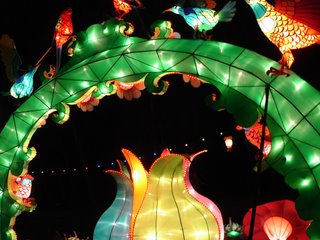
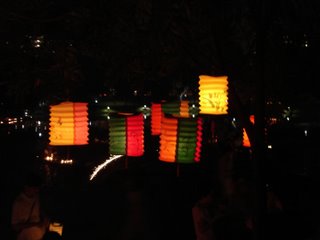
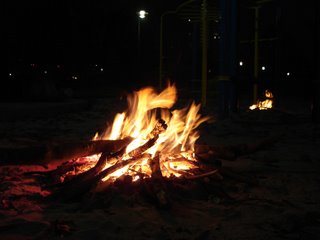
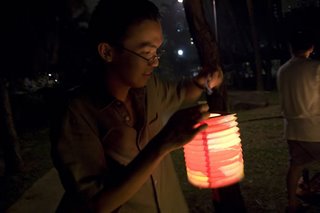
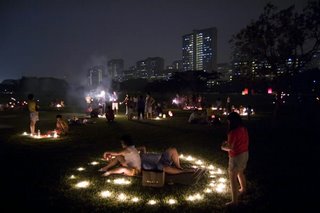
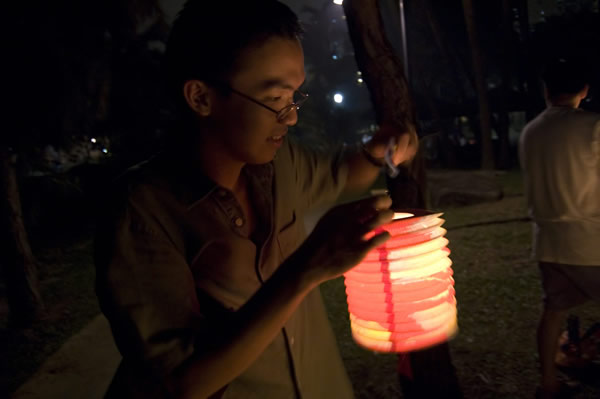
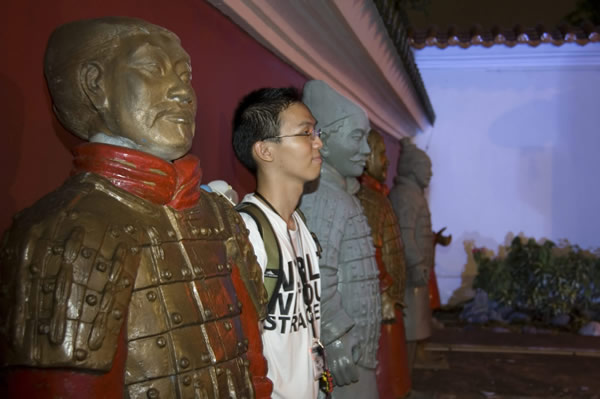
Mid-autumn is here again, the best festival of the year. I went to Chinese Garden last week and Bishan park last night. Here's a photo essay.
Chinese garden:
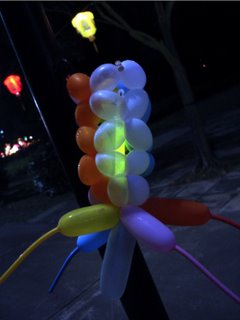 That's the lantern I made for myself.


Bishan Park:



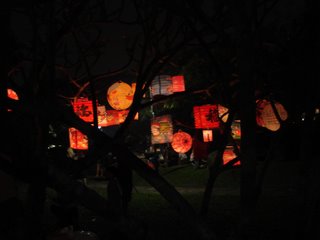


Pictures taken by Adam:
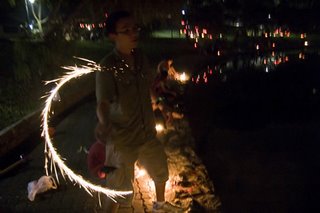

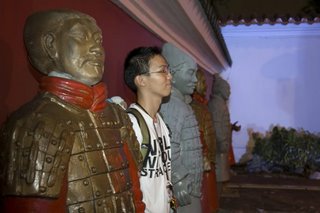
Chinese garden:
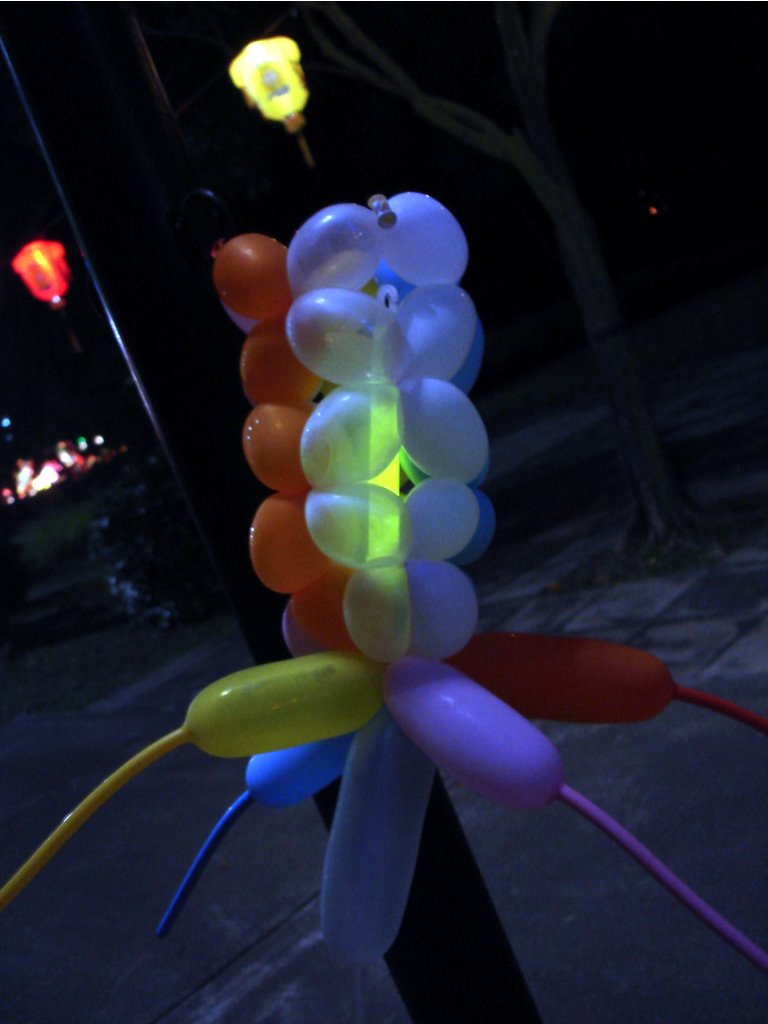 That's the lantern I made for myself.
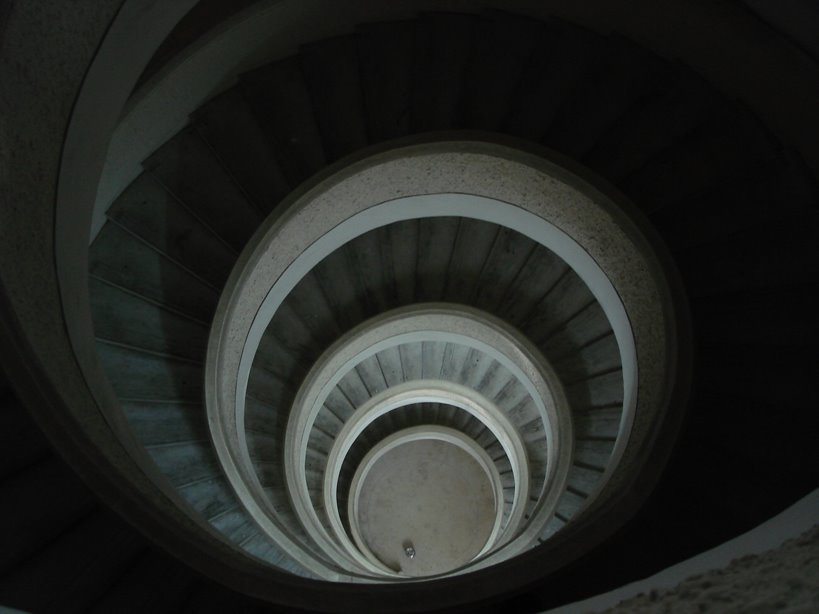


Bishan Park:


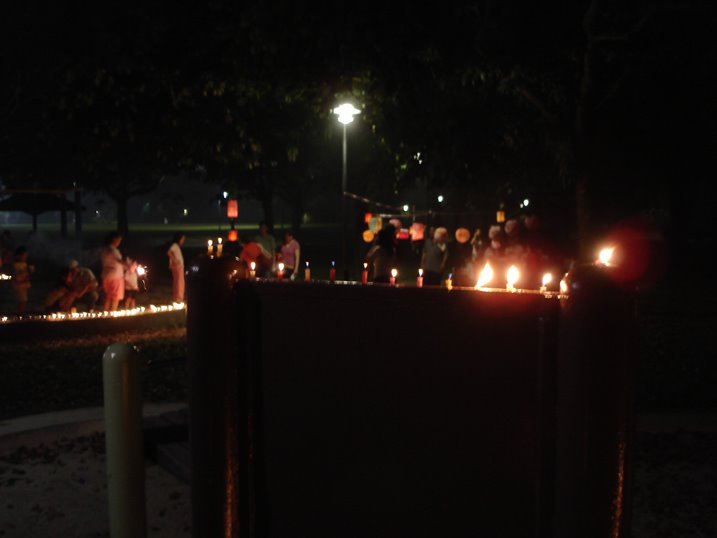


Pictures taken by Adam:



3 October 2006
Prime Minister dialogue and my crazy life
Finally got a chance to update my blog. The last 2 weeks have been C.R.A.Z.Y. I was having my reading week and was trying to catch up on my essays and readings. Didn't do as well in the catching up as I expected. How I wish I do not have to sleep, where's those sleep replacement pill that was featured in those science fiction novels?
Just turned in my philosophy essay, is working on my South East Asia reflection, and that's a dialogue I'm writing for chemistry class (it's a nonsensical convection between a guy name Ted and Mr. Methane), not forgetting my geography project which is a major worry for me, a couple of tests coming up, I'm also kind of worried about my South east Asia project, haven't thought of what to do yet. Whatever lah.
Moving on to R&R. Mid-Autumn is just around the corner, and I went to Chinese garden last friday to take some pictures of the lanterns. I'll also be going to Bishan park this friday for pictures taking and I'm not ashame to admit, lantern carrying. Mid-Autumn is my favourite festival of the year, just about the only festival I enjoy. On another note, I've planned a trip with some friends to Batam some time in November. Not very sensible since exams are held then, but I figured, what the heck.
I went to the Prime Minister dialogue, both the pre-dialogue discussion and the actual dialogue. I enjoyed myself, saw a couple of friends from NEA, met a few new ones and generally had a good time.
I find the actually dialogue more open that I've imagined, beside the few questioners that were 'appointed' during the pre-dialogue discussion, the prime minister opened the floor for questions. The answers were somewhat 'old hat', meaning that it's nothing we have not heard before but we were actively encouraged to speak up. My impression from the dialogue and talking to a MP at the reception is that there is a big question mark from the government as to why there is a lack of involvement and voices from the young people. Doesn't help that all the voices in the web seems to be against the ruling party. Dr Vivian mentioned that we have one of the most accessible government in the world, that all the MPs' and Ministers' emails are available to the public, and there are weekly meet-the-people session.
A teacher reflected there is a lot of fear of speaking out about race, religion and so on at the ground level. She wanted to set up a prayer area for Muslim students and the school respond is: "shhh!!!" No one dare to discuss it. I feel this has a lot to do with the government tough stand against anything that have to do with race and religion. The goal post shift so often and so sliently that most people just don't discuss it at all these days. I wonder if this is good for the long term healthy of our nation.
I didn't really take in much at the actual dialogue, reading the news have given me somewhat of a spider sense of what the respond will be like. There are a few interesting point I picked up at the pre-dialogue discussion. One guy raised the issue of what's the purpose of oversea volunteering programmes organised by schools and youth organisation? Is it to help the people there, or to educate Singapore students? The cost of sending a team of students oversea to repair fences and paint a school could probably build 2 new schools in the area. That is something for us to think about. possibly if the aim is for the benefit of the student in exposing them to different culture, the parents would be more supportive.
The question of race came up, very strongly. A girl with brown hair said she was booked by a prefect in JC for having dyed her hair brown. Problem is, she is born with brown hair. Her mother, being french I think, has brown hair. The JC prefect gave a master augment against her claim: "No, your surname is Lim, so you cannot have brown hair." Beautiful.
Another lady questioned the compulsory education of mother tongue based on your 'race' . What happened was that a boy who speaks Latin and English was shuffled into our education system and forced at the age of 10 to take Chinese classes. After a many appeals and letters to the MPs was he finally allowed to drop the subject.
Many such responds followed. Inter-race marriage is the norm, globalisation...The common 'CMIO' Chinese, Malay, Indian, others division is been questioned by many as irrelevant in today's culture. The respond to that is the many older folks find a lot of pride in their race and would react negatively to it taken off, not forgetting about preserving the cultures, and roots... blah. Indeed I can understand the difficulty in doing away with the 'race' in our IC. So much of our system is based on 'race', from who can stay in which HDB flat, to what subjects you study in school...
But as Singapore open up, wouldn't there be more and more 'others'? Another funny tale that was shared by this lady with (i'm guessing here, can't really remember) brown hair, tan skin, brown eyes, in short, nothing like chinese, on how she can always start a conversion by saying: 'Hi, I'm a chinese." Turns out that when she was 12, her chinese mother brought her to SIR to declare her Singapore citizenship, and the civil servant sitting behind the desk asked her what's her race. She didn't want to be 'others' but she also don't want to be laugh at by being 'chinese' when she looks nothing like it. Anyway the choice is between chinese and others. That's when the civil servant offered her this million dollar advice: "Why do you want to be one of them, when you could be one of us?" And that's how she was made a chinese.
Janadas Devan wrote:
P/S: I heard the good news that Singapore Dreaming won the Montblanc screenwriters award. Congrats! They really did a great job. Hope to see more work from Colin and Yen Yen soon.
Just turned in my philosophy essay, is working on my South East Asia reflection, and that's a dialogue I'm writing for chemistry class (it's a nonsensical convection between a guy name Ted and Mr. Methane), not forgetting my geography project which is a major worry for me, a couple of tests coming up, I'm also kind of worried about my South east Asia project, haven't thought of what to do yet. Whatever lah.
Moving on to R&R. Mid-Autumn is just around the corner, and I went to Chinese garden last friday to take some pictures of the lanterns. I'll also be going to Bishan park this friday for pictures taking and I'm not ashame to admit, lantern carrying. Mid-Autumn is my favourite festival of the year, just about the only festival I enjoy. On another note, I've planned a trip with some friends to Batam some time in November. Not very sensible since exams are held then, but I figured, what the heck.
I went to the Prime Minister dialogue, both the pre-dialogue discussion and the actual dialogue. I enjoyed myself, saw a couple of friends from NEA, met a few new ones and generally had a good time.
I find the actually dialogue more open that I've imagined, beside the few questioners that were 'appointed' during the pre-dialogue discussion, the prime minister opened the floor for questions. The answers were somewhat 'old hat', meaning that it's nothing we have not heard before but we were actively encouraged to speak up. My impression from the dialogue and talking to a MP at the reception is that there is a big question mark from the government as to why there is a lack of involvement and voices from the young people. Doesn't help that all the voices in the web seems to be against the ruling party. Dr Vivian mentioned that we have one of the most accessible government in the world, that all the MPs' and Ministers' emails are available to the public, and there are weekly meet-the-people session.
A teacher reflected there is a lot of fear of speaking out about race, religion and so on at the ground level. She wanted to set up a prayer area for Muslim students and the school respond is: "shhh!!!" No one dare to discuss it. I feel this has a lot to do with the government tough stand against anything that have to do with race and religion. The goal post shift so often and so sliently that most people just don't discuss it at all these days. I wonder if this is good for the long term healthy of our nation.
I didn't really take in much at the actual dialogue, reading the news have given me somewhat of a spider sense of what the respond will be like. There are a few interesting point I picked up at the pre-dialogue discussion. One guy raised the issue of what's the purpose of oversea volunteering programmes organised by schools and youth organisation? Is it to help the people there, or to educate Singapore students? The cost of sending a team of students oversea to repair fences and paint a school could probably build 2 new schools in the area. That is something for us to think about. possibly if the aim is for the benefit of the student in exposing them to different culture, the parents would be more supportive.
The question of race came up, very strongly. A girl with brown hair said she was booked by a prefect in JC for having dyed her hair brown. Problem is, she is born with brown hair. Her mother, being french I think, has brown hair. The JC prefect gave a master augment against her claim: "No, your surname is Lim, so you cannot have brown hair." Beautiful.
Another lady questioned the compulsory education of mother tongue based on your 'race' . What happened was that a boy who speaks Latin and English was shuffled into our education system and forced at the age of 10 to take Chinese classes. After a many appeals and letters to the MPs was he finally allowed to drop the subject.
Many such responds followed. Inter-race marriage is the norm, globalisation...The common 'CMIO' Chinese, Malay, Indian, others division is been questioned by many as irrelevant in today's culture. The respond to that is the many older folks find a lot of pride in their race and would react negatively to it taken off, not forgetting about preserving the cultures, and roots... blah. Indeed I can understand the difficulty in doing away with the 'race' in our IC. So much of our system is based on 'race', from who can stay in which HDB flat, to what subjects you study in school...
But as Singapore open up, wouldn't there be more and more 'others'? Another funny tale that was shared by this lady with (i'm guessing here, can't really remember) brown hair, tan skin, brown eyes, in short, nothing like chinese, on how she can always start a conversion by saying: 'Hi, I'm a chinese." Turns out that when she was 12, her chinese mother brought her to SIR to declare her Singapore citizenship, and the civil servant sitting behind the desk asked her what's her race. She didn't want to be 'others' but she also don't want to be laugh at by being 'chinese' when she looks nothing like it. Anyway the choice is between chinese and others. That's when the civil servant offered her this million dollar advice: "Why do you want to be one of them, when you could be one of us?" And that's how she was made a chinese.
Janadas Devan wrote:
In my optimistic moments, I sometimes think race is merely a collective delusion that people share about their origins. Just substitute a better delusion for a worse one - call "the race of Abraham", for example, "White", instead of Arab and Jew - and there will be world peace. Regrettably, it is not as simple as that.
P/S: I heard the good news that Singapore Dreaming won the Montblanc screenwriters award. Congrats! They really did a great job. Hope to see more work from Colin and Yen Yen soon.
Subscribe to:
Posts (Atom)


